The Colosseum, or Colosseo, is arguably the most famous amphitheatre, located at the heart of Rome, Italy. This architectural feat, was the largest amphitheatre built in the Roman Empire, seating 50,000 spectators. The finishing touches were put on this remarkable structure in 80 AD, and remained in use for almost 500 years. The Colosseum is most famously known its traditional gladiator games, but early Romans also held re-encarnations of famous battles, animal hunts, mock sea battles, and dramas based on ancient mythology.
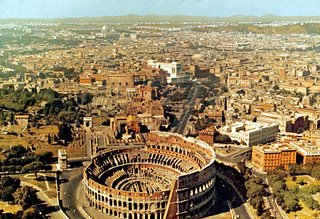
The site of the monument was chosen between the Caelian, Esquiline and Palatine Hills, by a nearby stream, sparking rapid growth in the area. The Colosseum went through several radical changes during the Medieval period, from having a small church built into the structure, to being used as a castle by the Frangipani family in the 1200s. Then in the 16th and 17th century, the Church, under the guidance of Pope Sixtus, decided to take a more active roll, and planned on turning the building into a wool factory to provide employment for those in need. However this plan fell through with his death.
Today, the Colosseum is one of the most popular tourist attractions, not only in Rome, but in the world. The effects of general deterioration sparked a restoration program between 1993 and 2000, costing around 40 billion lira.
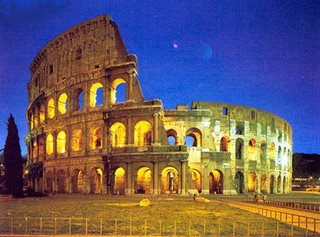
Although the interior of the Colosseum is in no condition to host events anymore, some internationally known performers, including Paul McCartney and Elton John, have held concerts just outside, using this incredible structure as a backdrop. To listen to a walking tour of the inside of the Coloseum on your iPod or mp3 player, visit Tourcaster.
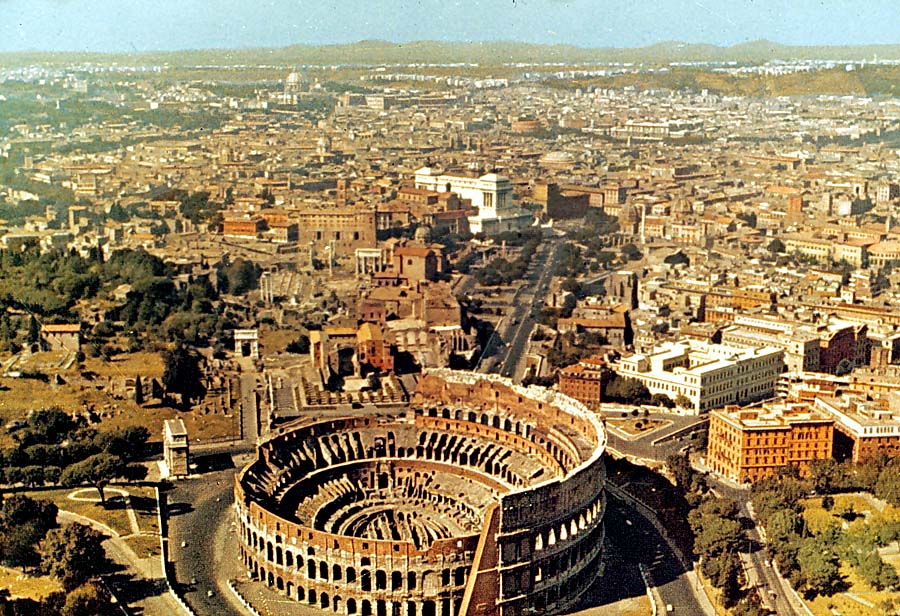
The site of the monument was chosen between the Caelian, Esquiline and Palatine Hills, by a nearby stream, sparking rapid growth in the area. The Colosseum went through several radical changes during the Medieval period, from having a small church built into the structure, to being used as a castle by the Frangipani family in the 1200s. Then in the 16th and 17th century, the Church, under the guidance of Pope Sixtus, decided to take a more active roll, and planned on turning the building into a wool factory to provide employment for those in need. However this plan fell through with his death.
Today, the Colosseum is one of the most popular tourist attractions, not only in Rome, but in the world. The effects of general deterioration sparked a restoration program between 1993 and 2000, costing around 40 billion lira.

Although the interior of the Colosseum is in no condition to host events anymore, some internationally known performers, including Paul McCartney and Elton John, have held concerts just outside, using this incredible structure as a backdrop. To listen to a walking tour of the inside of the Coloseum on your iPod or mp3 player, visit Tourcaster.
Labels: Coliseum, Colosseum, gladiators, iPod, Italian tourism, Italy, Roman Empire, Rome, travel, vacation
posted by Tourcaster at 3:40 PM
0 comments